
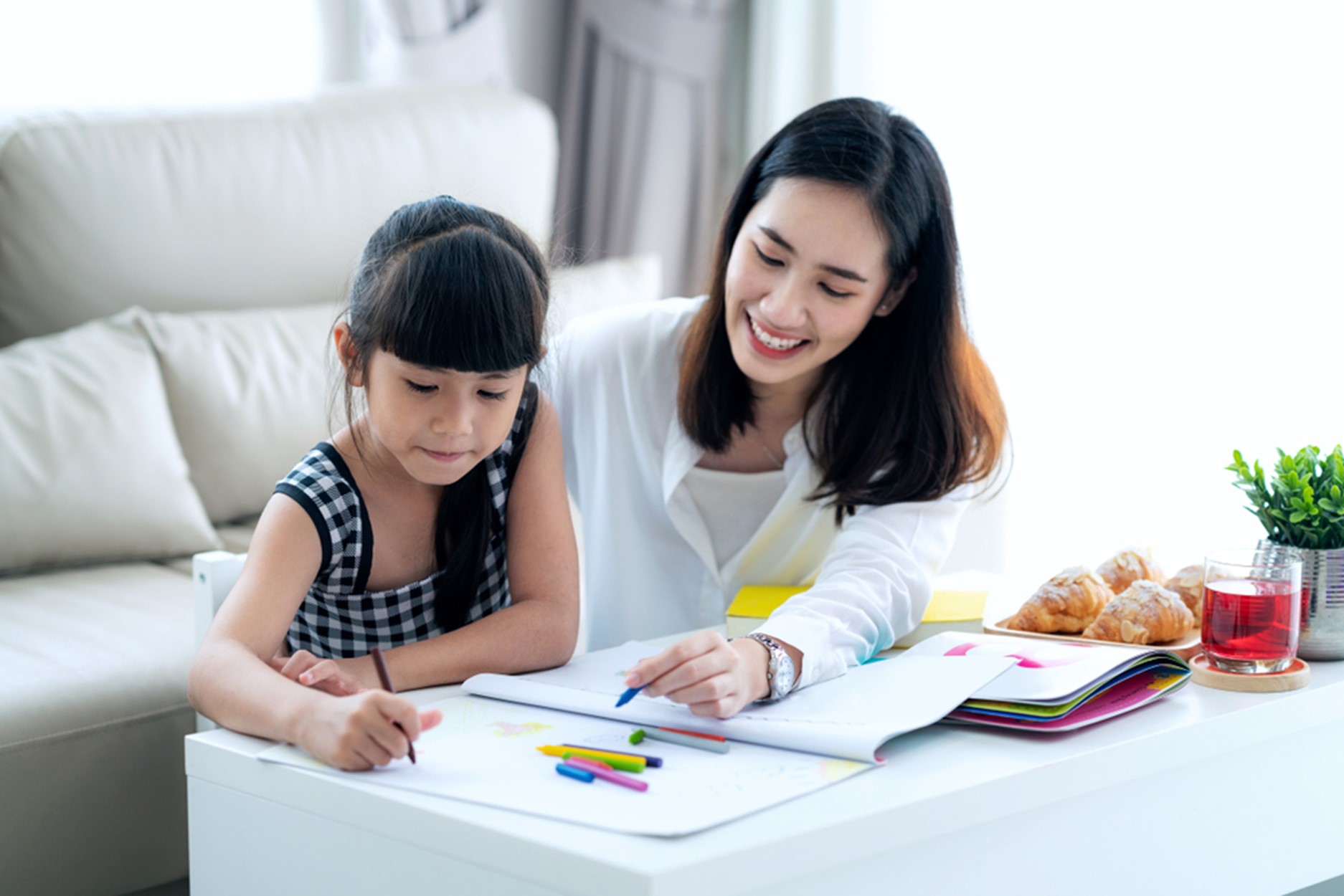
 The techniques used in dialogic reading, including questioning and the subsequent interaction between parents and children, can actually be applied and practiced not only in reading but also in everyday life.
For example, during playtime or when encountering something new while out shopping or seeing objects around, these questioning methods can be applied. As for the steps, we engage in a conversation and exchange with the child. For instance, if we are playing with trains at home, parents can use a questioning approach like, 'When we're on transportation, what do we usually ride?'
These methods can encourage children to express themselves more and foster greater interaction with their parents. Besides play, children often enjoy drawing. During the process of drawing, you can also employ dialogic reading techniques. For example, ask questions like, 'What is the content of this drawing?' 'What is this?' 'When did you see this? Could it be related to the playground equipment we saw at the park last week?
The techniques used in dialogic reading, including questioning and the subsequent interaction between parents and children, can actually be applied and practiced not only in reading but also in everyday life.
For example, during playtime or when encountering something new while out shopping or seeing objects around, these questioning methods can be applied. As for the steps, we engage in a conversation and exchange with the child. For instance, if we are playing with trains at home, parents can use a questioning approach like, 'When we're on transportation, what do we usually ride?'
These methods can encourage children to express themselves more and foster greater interaction with their parents. Besides play, children often enjoy drawing. During the process of drawing, you can also employ dialogic reading techniques. For example, ask questions like, 'What is the content of this drawing?' 'What is this?' 'When did you see this? Could it be related to the playground equipment we saw at the park last week?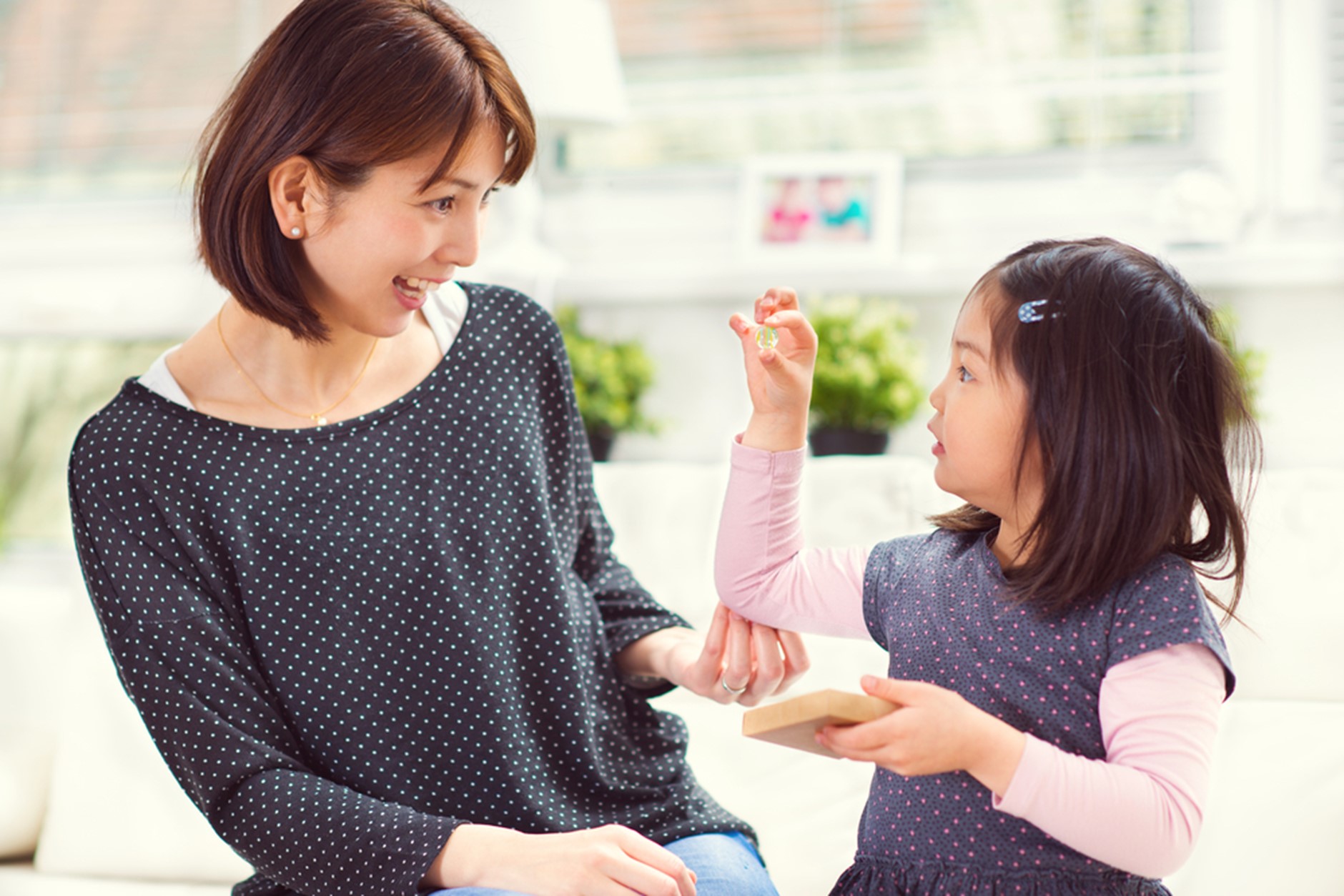 These are actually just a part of the dialogic reading techniques, and there are some additional tips for dialogic reading. For example, deliberate pauses are important for us. Sometimes, parents may be a bit impatient and expect an immediate response after asking a question. However, we should give children some space and time to answer gradually. Children need time to organize their thoughts and sentences. If we remember the techniques of dialogic reading, they can help us be more patient in our everyday conversations with children.
 https://www.shutterstock.com/zh/image-photo/little-handsome-boy-touch-on-ipad-238047853
Written by: Speech Therapist, Lee Wing Yan
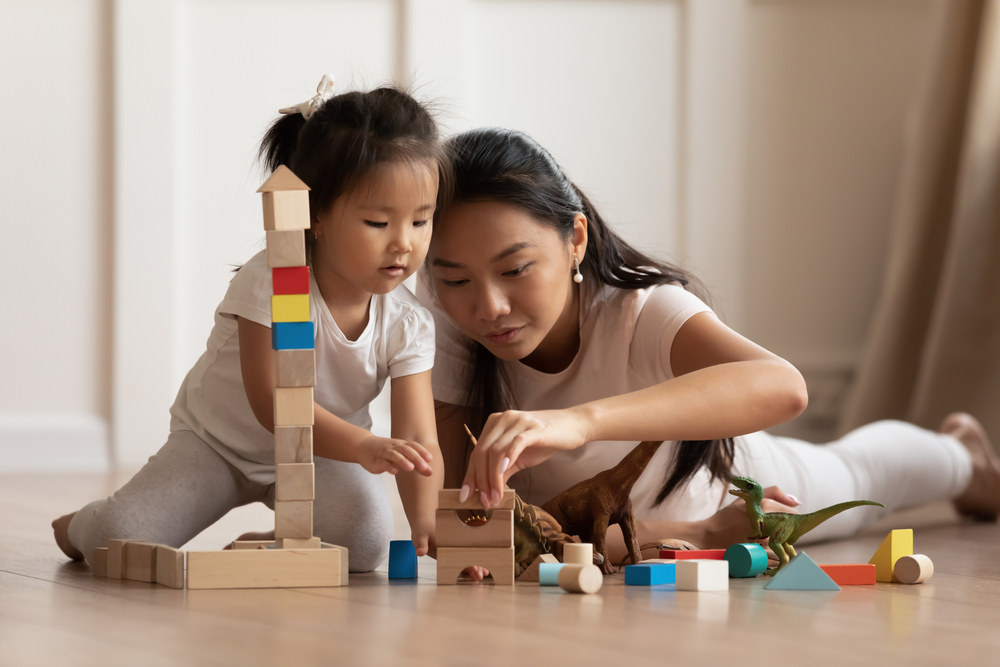
With the advancement of technology and material abundance nowadays, it's not hard to see that tablets are being used as "electronic pacifiers" for young children. Regardless of the occasion, whenever parents bring out this "electronic pacifier" and play YouTube videos, children sit quietly, and adults can focus on their tasks. Since tablets and smartphones can calm young children and provide educational games and videos for learning, does that mean they are quality toys?
The key to selecting "quality toys" lies in whether young children can genuinely learn from them. Indeed, educational videos and interactive games can offer the cognitive concepts that preschoolers need to learn, but we also need to consider how preschoolers actually learn language.
Recent foreign research explores the impact of the parent-child interaction pattern on language development one year later (i.e., at age 3). The study found that the presence of "connectedness" between parents and children during interactions most influenced the child's subsequent language development, including whether both parties participated in the same activity in turns. Additionally, children's learning of verbs, such as "I eat" in "eat" or "Mom drinks water" in "drink," directly affects their future language development (from the three examples above, it's clear that to form complete sentences, children need to recognize a certain number of verbs).
Seizing everyday life opportunities to teach verbs through activities
So, can tablets and smartphones achieve the mentioned "connectedness"? Based on my daily observations, children tend to use tablets and smartphones alone, and they resist it when parents want to intervene. Furthermore, most of what children learn from videos are limited to English alphabets, counting, nursery rhymes, cartoon character names, or specific dialogues from cartoon characters. But what about verbs? Verbs are often easily overlooked in videos because children can learn them more effectively by doing them in real situations! For example, teaching a child the action of "brushing teeth" doesn't it involve singing a nursery rhyme "Up and down the brush," repeatedly emphasizing the action of "brushing," and brushing teeth together with them? In daily life, whether during bath time, cooking, playing with toys, or going to the park, parents can take the opportunity to teach relevant verbs used in different scenarios through interactive activities.
https://www.shutterstock.com/zh/image-photo/little-handsome-boy-touch-on-ipad-238047853
Written by: Speech Therapist, Lee Wing Yan
With the advancement of technology and material abundance nowadays, it's not hard to see that tablets are being used as "electronic pacifiers" for young children. Regardless of the occasion, whenever parents bring out this "electronic pacifier" and play YouTube videos, children sit quietly, and adults can focus on their tasks. Since tablets and smartphones can calm young children and provide educational games and videos for learning, does that mean they are quality toys?
The key to selecting "quality toys" lies in whether young children can genuinely learn from them. Indeed, educational videos and interactive games can offer the cognitive concepts that preschoolers need to learn, but we also need to consider how preschoolers actually learn language.
Recent foreign research explores the impact of the parent-child interaction pattern on language development one year later (i.e., at age 3). The study found that the presence of "connectedness" between parents and children during interactions most influenced the child's subsequent language development, including whether both parties participated in the same activity in turns. Additionally, children's learning of verbs, such as "I eat" in "eat" or "Mom drinks water" in "drink," directly affects their future language development (from the three examples above, it's clear that to form complete sentences, children need to recognize a certain number of verbs).
Seizing everyday life opportunities to teach verbs through activities
So, can tablets and smartphones achieve the mentioned "connectedness"? Based on my daily observations, children tend to use tablets and smartphones alone, and they resist it when parents want to intervene. Furthermore, most of what children learn from videos are limited to English alphabets, counting, nursery rhymes, cartoon character names, or specific dialogues from cartoon characters. But what about verbs? Verbs are often easily overlooked in videos because children can learn them more effectively by doing them in real situations! For example, teaching a child the action of "brushing teeth" doesn't it involve singing a nursery rhyme "Up and down the brush," repeatedly emphasizing the action of "brushing," and brushing teeth together with them? In daily life, whether during bath time, cooking, playing with toys, or going to the park, parents can take the opportunity to teach relevant verbs used in different scenarios through interactive activities.
 https://www.shutterstock.com/zh/image-photo/involved-little-daughter-her-vietnamese-mother-1702499908
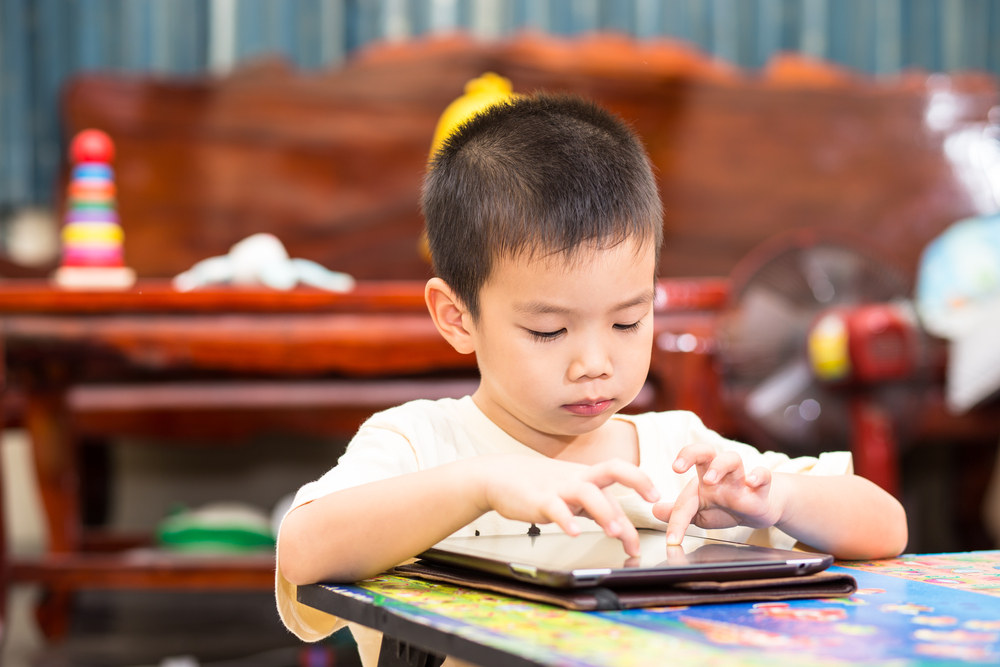
Furthermore, research also indicates that the quality of interaction between parents and young children during play and reading, including the vocabulary adults input to children and the spontaneous "baby talk" from children, is higher compared to when using tablets and smartphones. Scholars generally believe that young children's language learning primarily occurs through interaction with people. Therefore, if young children excessively use tablets and smartphones, reducing interaction with family members, it may be detrimental to their language development.
So, what defines a "quality toy"? Whether it's choosing tablets, smartphones, or traditional toys like dolls, puzzles, and toy cars, the most important aspect to consider is:
Does it promote interaction and communication between parents and children?
Does it replace original opportunities for parent-child interaction?
In parent-child interaction and communication, parents can use various communication techniques to enrich the child's language environment. These techniques have been mentioned in the previous article on "Four Communication Styles." Toys are, in fact, just tools. Through toys and quality interaction, we aim to enhance young children's language development.
https://www.shutterstock.com/zh/image-photo/involved-little-daughter-her-vietnamese-mother-1702499908
Furthermore, research also indicates that the quality of interaction between parents and young children during play and reading, including the vocabulary adults input to children and the spontaneous "baby talk" from children, is higher compared to when using tablets and smartphones. Scholars generally believe that young children's language learning primarily occurs through interaction with people. Therefore, if young children excessively use tablets and smartphones, reducing interaction with family members, it may be detrimental to their language development.
So, what defines a "quality toy"? Whether it's choosing tablets, smartphones, or traditional toys like dolls, puzzles, and toy cars, the most important aspect to consider is:
Does it promote interaction and communication between parents and children?
Does it replace original opportunities for parent-child interaction?
In parent-child interaction and communication, parents can use various communication techniques to enrich the child's language environment. These techniques have been mentioned in the previous article on "Four Communication Styles." Toys are, in fact, just tools. Through toys and quality interaction, we aim to enhance young children's language development. https://www.shutterstock.com/zh/image-photo/mother-having-serious-conversation-daughter-home-1944768706
Written by: Education expert, Principal Cheung Wai jing
At a talent recruitment event for a large multinational company, both Siu Cheung and Siu Choi successfully passed the initial and follow-up interviews. They stood out from over 100 competitors. Whether it was written tests or communication skills, both were equally impressive, leaving the human resources department's evaluators in a dilemma, as the company would only hire one person.
In the end, the company manager decided to personally interview both candidates. Surprisingly, after just a few minutes, the manager chose to hire Siu Cheung. When asked for the reason, the manager candidly stated, "The reason is simple. When I was speaking to them, Siu Cheung maintained eye contact with me the whole time, while Siu Choi was looking around, indicating that he wasn't good at actively listening to others. Being adept at listening and respecting clients is a crucial requirement for a sales supervisor."
Expressing Sincerity and Respect through Eye Contact
This example illustrates a straightforward lesson: eyes are the windows to the soul, and people use their gaze to convey a range of emotions such as respect, attention, disdain, and indifference. Therefore, maintaining consistent eye contact during conversations signifies your sincerity. Moreover, those who can attentively focus on others' words without shifting their gaze will naturally earn gratitude and respect from others.
Schools often organize activities centered around the theme of "politeness" to encourage students to be courteous to others. "Others" includes not only family members, elders, teachers, and fellow students but also unfamiliar people. Children should learn early on about polite phrases like "good morning" and "thank you," but many still don't proactively greet others, let alone observe other daily life etiquette. Schools focus on teaching students how to behave politely when interacting with teachers and peers in the school setting; the rest relies on family education.
https://www.shutterstock.com/zh/image-photo/mother-having-serious-conversation-daughter-home-1944768706
Written by: Education expert, Principal Cheung Wai jing
At a talent recruitment event for a large multinational company, both Siu Cheung and Siu Choi successfully passed the initial and follow-up interviews. They stood out from over 100 competitors. Whether it was written tests or communication skills, both were equally impressive, leaving the human resources department's evaluators in a dilemma, as the company would only hire one person.
In the end, the company manager decided to personally interview both candidates. Surprisingly, after just a few minutes, the manager chose to hire Siu Cheung. When asked for the reason, the manager candidly stated, "The reason is simple. When I was speaking to them, Siu Cheung maintained eye contact with me the whole time, while Siu Choi was looking around, indicating that he wasn't good at actively listening to others. Being adept at listening and respecting clients is a crucial requirement for a sales supervisor."
Expressing Sincerity and Respect through Eye Contact
This example illustrates a straightforward lesson: eyes are the windows to the soul, and people use their gaze to convey a range of emotions such as respect, attention, disdain, and indifference. Therefore, maintaining consistent eye contact during conversations signifies your sincerity. Moreover, those who can attentively focus on others' words without shifting their gaze will naturally earn gratitude and respect from others.
Schools often organize activities centered around the theme of "politeness" to encourage students to be courteous to others. "Others" includes not only family members, elders, teachers, and fellow students but also unfamiliar people. Children should learn early on about polite phrases like "good morning" and "thank you," but many still don't proactively greet others, let alone observe other daily life etiquette. Schools focus on teaching students how to behave politely when interacting with teachers and peers in the school setting; the rest relies on family education.
 https://www.shutterstock.com/zh/image-photo/6-years-old-happy-little-asian-1677620014
The example of "job hunting" mentioned above might not be applicable to elementary school students for the time being, but they also frequently have opportunities for interviews. If they want to leave a good impression on others, children must learn to use their eyes to show their attention and respect when conversing with others. Therefore, parents need to teach children the skills and art of listening. Of course, when parents listen to their children, they should also give them appropriate respect and attention. This way, children will learn that politeness in interpersonal interactions knows no age or status boundaries. Here are three listening tips:
https://www.shutterstock.com/zh/image-photo/6-years-old-happy-little-asian-1677620014
The example of "job hunting" mentioned above might not be applicable to elementary school students for the time being, but they also frequently have opportunities for interviews. If they want to leave a good impression on others, children must learn to use their eyes to show their attention and respect when conversing with others. Therefore, parents need to teach children the skills and art of listening. Of course, when parents listen to their children, they should also give them appropriate respect and attention. This way, children will learn that politeness in interpersonal interactions knows no age or status boundaries. Here are three listening tips:
 Source: Registered Clinical Psychologist, Yiu Fong Lee
Many parents find that their children can be quite self-centered. When playing games or interacting with a group, they always want others to follow their rules. For example, a 5-year-old girl insists on playing with building blocks while her friend wants to play with cars. In such a situation, what should parents do? If the child becomes unhappy and self-centered, she may throw a tantrum and refuse to play with others. People may perceive this child as stubborn or temperamental. Here are a few methods that parents can consider to deal with their self-centered child.
First, it's important to acknowledge the child's emotions. Parents can approach the child and say, "Yes, I understand that you are feeling angry and unhappy right now because you really want to play with building blocks, but the other children don't want to. Does it make you feel upset that you can't play with the building blocks?" At this moment, parents can try patting or hugging the child, providing a sense of affirmation and closeness, allowing the child's emotions to gradually calm down. When the child appears calmer, it's an opportunity to help her move on to the next step.
The second step is called perspective-taking or putting oneself in others' shoes. Encourage the child to imagine how the other person feels by entering their world or role. Parents can engage in role-playing with the child. For example, if the girl was A and the other child was B, the girl can now pretend to be B, and the parent can pretend to be A. The parent can imitate her tone and say, "I don't want to play! I don't like playing with cars! I must play with building blocks!" Then, the parent can ask the child, "How does that make you feel?" The child usually responds with, "He always insists on playing his way, and I don't want to play with him. I feel unhappy."
Source: Registered Clinical Psychologist, Yiu Fong Lee
Many parents find that their children can be quite self-centered. When playing games or interacting with a group, they always want others to follow their rules. For example, a 5-year-old girl insists on playing with building blocks while her friend wants to play with cars. In such a situation, what should parents do? If the child becomes unhappy and self-centered, she may throw a tantrum and refuse to play with others. People may perceive this child as stubborn or temperamental. Here are a few methods that parents can consider to deal with their self-centered child.
First, it's important to acknowledge the child's emotions. Parents can approach the child and say, "Yes, I understand that you are feeling angry and unhappy right now because you really want to play with building blocks, but the other children don't want to. Does it make you feel upset that you can't play with the building blocks?" At this moment, parents can try patting or hugging the child, providing a sense of affirmation and closeness, allowing the child's emotions to gradually calm down. When the child appears calmer, it's an opportunity to help her move on to the next step.
The second step is called perspective-taking or putting oneself in others' shoes. Encourage the child to imagine how the other person feels by entering their world or role. Parents can engage in role-playing with the child. For example, if the girl was A and the other child was B, the girl can now pretend to be B, and the parent can pretend to be A. The parent can imitate her tone and say, "I don't want to play! I don't like playing with cars! I must play with building blocks!" Then, the parent can ask the child, "How does that make you feel?" The child usually responds with, "He always insists on playing his way, and I don't want to play with him. I feel unhappy."
 Parents can also ask the child, "If that's the case, do you still want to play with this child and spend time together in the future?" The girl might respond, "I don't really want to. If that's the case, I'll have to play alone by myself, and it's boring." Children usually want someone to play with.
Moving on to the third step, learning problem-solving. Parents can brainstorm ideas with the child, such as trying a game of rock-paper-scissors with the other child. It could be agreed that this time the winner gets to decide, and next time it could be the loser's turn. Alternatively, we can switch and combine different ideas creatively. For example, in the case of playing with building blocks, can we play with both the building blocks and the cars? We can build a parking lot with the blocks and then let the cars drive on them. This way, we can play together.
Parents can also ask the child, "If that's the case, do you still want to play with this child and spend time together in the future?" The girl might respond, "I don't really want to. If that's the case, I'll have to play alone by myself, and it's boring." Children usually want someone to play with.
Moving on to the third step, learning problem-solving. Parents can brainstorm ideas with the child, such as trying a game of rock-paper-scissors with the other child. It could be agreed that this time the winner gets to decide, and next time it could be the loser's turn. Alternatively, we can switch and combine different ideas creatively. For example, in the case of playing with building blocks, can we play with both the building blocks and the cars? We can build a parking lot with the blocks and then let the cars drive on them. This way, we can play together.
 We help the child come up with different types of solutions, but the most important thing is for them to understand how their behavior affects and impacts others, and how they can change their behavior so that others would be more willing to play with them. This is known as prosocial behav
 Source: Speech Therapist, Miss Carley
In order to help children learn a language, parents use various methods. Have you ever considered singing as one of the methods? Music is an international language and is highly engaging for children. We also have many different ways to use music to assist children in language learning.
One simple method is called "lyric filling." This method can be used for children who may not yet be able to speak or can only say a few words. Parents can try using this method. Choose a familiar song that the child knows, such as "Twinkle Twinkle Little Star." However, instead of singing the entire song, use a single syllable to sing the entire song, for example, "ma ma ma ma ma ma ma ma ma ma ma ma ma." Then suddenly stop and wait for the child to hum or sing the remaining syllable. Parents can encourage the child to vocalize that particular syllable.
Source: Speech Therapist, Miss Carley
In order to help children learn a language, parents use various methods. Have you ever considered singing as one of the methods? Music is an international language and is highly engaging for children. We also have many different ways to use music to assist children in language learning.
One simple method is called "lyric filling." This method can be used for children who may not yet be able to speak or can only say a few words. Parents can try using this method. Choose a familiar song that the child knows, such as "Twinkle Twinkle Little Star." However, instead of singing the entire song, use a single syllable to sing the entire song, for example, "ma ma ma ma ma ma ma ma ma ma ma ma ma." Then suddenly stop and wait for the child to hum or sing the remaining syllable. Parents can encourage the child to vocalize that particular syllable.
 The second method is to sing action songs with children, which involve movements. For example, the well-known song "If You're happy and you know it, clap your hands." You can sing this song with the child while performing different actions. Through this, children can learn different movements and some nouns and vocabulary.
Interestingly, music can enhance children's memory. Have you ever noticed that there are many songs we heard when we were young or many years ago, and even if we haven't sung them in years, we can still remember the lyrics? Therefore, we can simply sing the ABC Song with children to teach them basic English letters. We can also learn numbers with children, for example, "One Little, Two Little, Three Little Indians."
The second method is to sing action songs with children, which involve movements. For example, the well-known song "If You're happy and you know it, clap your hands." You can sing this song with the child while performing different actions. Through this, children can learn different movements and some nouns and vocabulary.
Interestingly, music can enhance children's memory. Have you ever noticed that there are many songs we heard when we were young or many years ago, and even if we haven't sung them in years, we can still remember the lyrics? Therefore, we can simply sing the ABC Song with children to teach them basic English letters. We can also learn numbers with children, for example, "One Little, Two Little, Three Little Indians."
 If we want to teach children the English names of the days of the week, we can sing "Monday, Tuesday, Wednesday, Thursday, Friday, Saturday, and Sunday" with them. By incorporating vocabulary into music, it makes it easier for children to remember the words.
The fourth method is to try singing out certain phrases, similar to singing. We can also use props to assist, such as simple flashcards. For example, if we want to say, "Chan Siu Ming is eating an apple," we can sing it out using a musical approach, which enhances the child's motivation and interest in communication.
If we want to teach children the English names of the days of the week, we can sing "Monday, Tuesday, Wednesday, Thursday, Friday, Saturday, and Sunday" with them. By incorporating vocabulary into music, it makes it easier for children to remember the words.
The fourth method is to try singing out certain phrases, similar to singing. We can also use props to assist, such as simple flashcards. For example, if we want to say, "Chan Siu Ming is eating an apple," we can sing it out using a musical approach, which enhances the child's motivation and interest in communication.


